Path & Practice
Pragmatic meditation is not about escaping the world or conforming to a rigid set of historical rituals. It is an empirical, direct exploration of your own mind and biology. Here, we measure success not by how long you can sit in silence, but by how cleanly you can navigate your daily life.
On this page, you will find the core principles of our approach, followed by details on how you can practice with us in our live classes.
Putting it into Practice: The R&F Foundation Class
While understanding the ideas behind meditation is valuable, the real benefits only come when we put them into action.
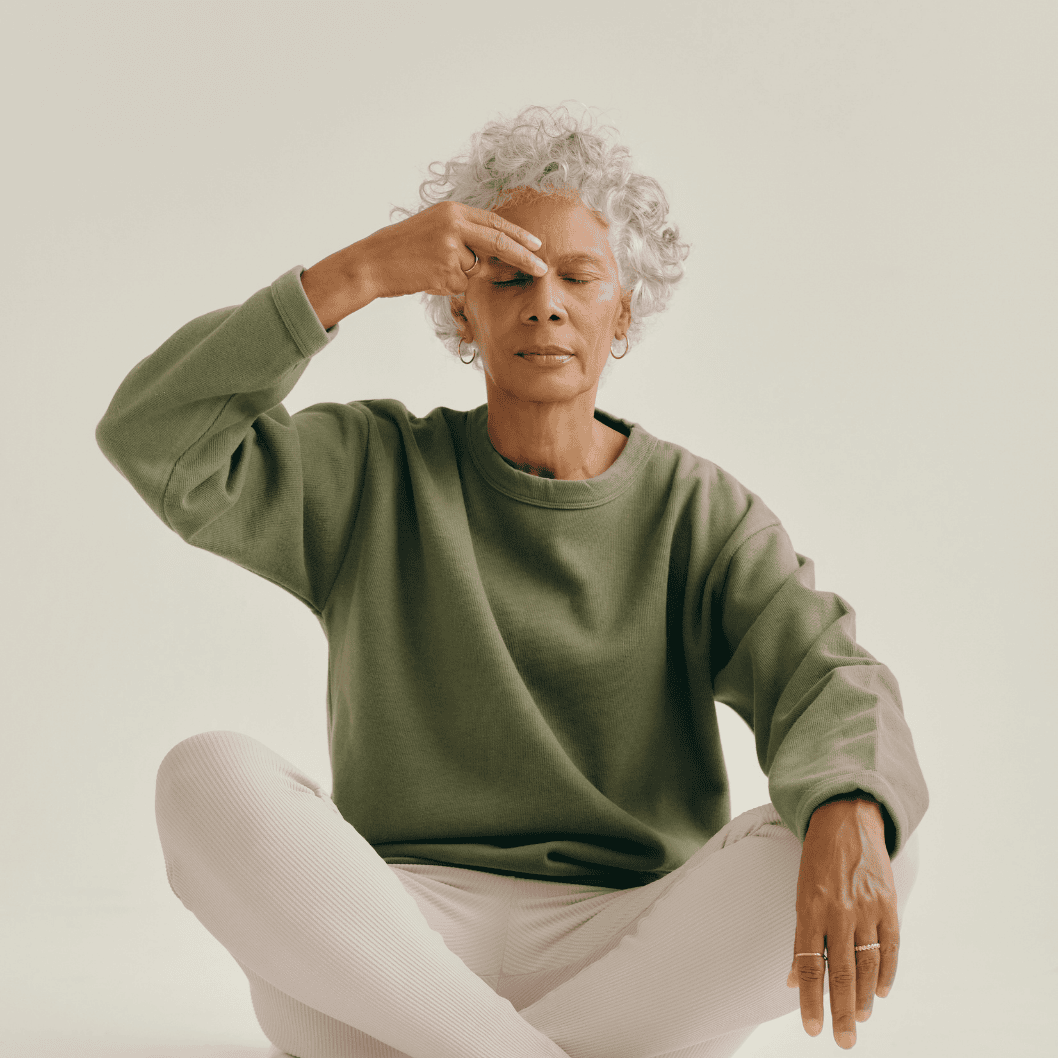
To help you transition from theory to a reliable daily habit, we offer a simple, 5-session course (1 hour over 5 Sundays) called the R&F (Relax & Focus) Foundation Class. It is a down-to-earth, quiet space where we learn how to make these techniques work for your actual schedule.
Here is what we cover together:
Session 2: Finding a Rhythm
Teaching: The simple biology of breathing rhythms, showing how changing your patterns directly calms your nervous system.
Practice: We introduce rhythmic breathing, using simple patterns like a second rhythm and an second rhythm.
Goal: Use the breath to steady a busy mind and quiet the body's stress response.
What is Pragmatic Meditation?
Our approach is gently inspired by Pragmatic Buddhism—a contemporary, secular development that grows out of Chan and Zen teachings. While it is a quiet, less prominent branch of meditation, its core philosophy is straightforward: it focuses on the practical application of these teachings in daily life, rather than on complex rituals or theoretical debates. Historically drawing from both the earliest teachings of the historical Buddha and the practical, experiential mindset of philosophical pragmatism, this perspective treats your actual, everyday routine as the primary space for practice.
In pragmatic meditation, there is no need to adopt a new belief system or alter your existing faith. Instead, we treat the mind as a supportive, personal canvas. By focusing on direct, physical clarity and using simple biological anchors like the breath, we train our attention to observe thoughts as passing, quiet events. The goal is not to chase perfect, unchanging quietness, but to build a supportive, real-world foundation that encourages decency, clear-headedness, and a steady presence in the middle of a busy life.
What is Pranayama Yoga?
Pranayama Yoga is the ancient practice of conscious breath regulation. In the wider landscape of contemplative traditions, it sits as a natural bridge between active physical movement (such as yoga postures) and silent mental focus (such as meditation). By quietening physical restlessness, working with the breath makes it much easier for the mind to settle.
While pranayama yoga was born in India and is historically rooted in classical Hindu teachings, we treat it here as a completely non-sectarian, physical discipline. You do not need to adopt any Eastern philosophy, cosmology, or religious belief system to practice it. Instead, we approach it as a straightforward, biological toolkit. By gently shifting the rhythm, depth, and patterns of our breathing, we directly soothe our nervous system and ease the body's stress response. It is a practical, powerful, universal craft that belongs to your biology, designed to help you find a steady, quiet space within yourself.
Book an Appointment
View Schedule & Book a Class
Practice on InsightTimer